
SPEECH PRIVACY & NOISE CONTROL FOR OFFICES
Office & Meeting Room Soundproofing in Toronto
Improve speech privacy and reduce unwanted sound between offices, meeting rooms, boardrooms and adjoining workspaces with solutions designed around the actual transmission paths in your building.
Inaudible works with businesses across Toronto and the GTA to address sound travelling through walls, suspended ceilings, shared air returns, doors and other connected building components.
TRUSTED BY COMMERCIAL CLIENTS










COMMON OFFICE NOISE PROBLEMS
Where Office Soundproofing Matters Most
Different office environments create different privacy and noise-control challenges. The first step is understanding what is being heard, where it originates and which spaces are connected.
Executive Offices & Boardrooms
Reduce speech travelling between leadership spaces, adjoining offices, corridors and shared meeting areas.
HR & Private Conversations
Improve speech privacy where employee matters, interviews and sensitive discussions take place beside occupied workspaces.
Meeting Rooms & Private Offices
Address voices moving through shared partitions, ceiling spaces, doors and mechanical systems.
Adjacent Tenants & Shared Walls
Reduce unwanted sound entering or leaving the office through demising walls and connected construction.
When Private Conversations Travel
SPEECH PRIVACY
Boardrooms, HR offices, executive spaces and meeting rooms often sit directly beside occupied work areas.
If conversations can be understood outside the room, sound may be travelling through the partition—or bypassing it through the suspended ceiling, shared air paths, doors and perimeter gaps.
Improving speech privacy starts by identifying those transmission paths and treating the conditions that matter.
When Outside Noise Interrupts Focus
WORKPLACE NOISE
Office noise does not always originate inside the room.
Traffic, neighbouring tenants, footsteps from above, mechanical equipment and activity in adjoining spaces can all interfere with concentration, calls and meetings.
The appropriate solution depends on where the noise originates and how it is entering the workspace.
THE WALL MAY ONLY BE PART OF THE PROBLEM
When Conversations Travel Beyond the Room
A private office can look completely enclosed while still sharing several acoustic paths with the surrounding workplace.
Sound may pass directly through the partition, travel above it through a suspended ceiling, move through shared air-return paths or leak around doors, electrical penetrations and perimeter gaps.
This is why treating one visible wall does not necessarily resolve an office speech-privacy problem. The solution begins by identifying the paths that matter in the actual building.
A private room is only as strong as its weakest sound path.

Speech Can Travel Around the Wall
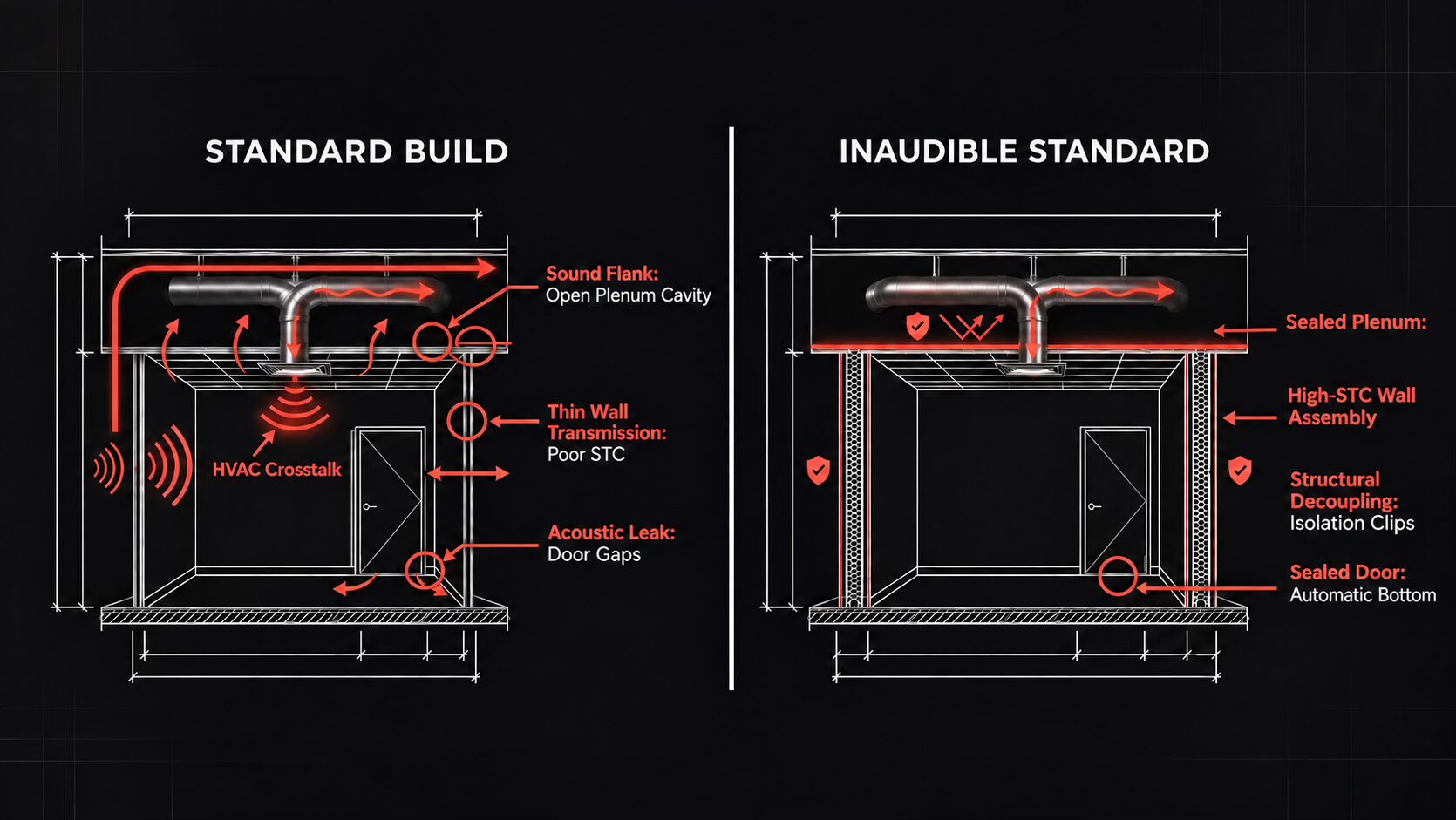
Wall Cavities
Empty or lightly treated partitions can allow airborne speech to pass between adjoining offices and meeting spaces.
Ceiling & Plenum Paths
Where partitions terminate at a suspended ceiling, conversations may travel upward and across the shared ceiling space.
HVAC Crosstalk
Shared supply and return-air paths can connect rooms acoustically even when the partition itself is substantial.
Doors, Mullions & Penetrations
Door gaps, electrical boxes, perimeter joints, window mullions and other openings can create secondary leakage paths.
SITE-SPECIFIC SOUND CONTROL
A Layered Approach to Office Speech Privacy
There is rarely one universal office soundproofing assembly.
Inaudible selects the approach according to the existing construction, the rooms involved, the type of sound and the transmission paths identified in the space.
Many retrofit projects begin by treating the most important leakage paths while preserving as much of the existing office as practical.
When More Isolation Is Required
Some offices require more than targeted retrofit work.
Where the privacy objective or existing construction calls for a higher level of intervention, the solution may incorporate isolation clips and channels, additional mass, damping materials, specialty gypsum and other wall or ceiling components.
Wall Cavity Treatment
Existing wall cavities can often be treated with dense-pack cellulose through controlled access ports when airborne speech transmission through the partition is part of the problem.
Ceiling & Plenum Treatment
Additional treatment may be required where conversations travel above partitions through the suspended-ceiling space.
HVAC Crosstalk Control
Crosstalk silencers and related duct treatments can help reduce direct speech transmission through shared air paths while maintaining required airflow.
Doors & Perimeter Sealing
Acoustic door seals, sweeps and targeted sealing can address leakage around doors, mullions, penetrations and assembly edges.
TWO DIFFERENT ACOUSTIC PROBLEMS
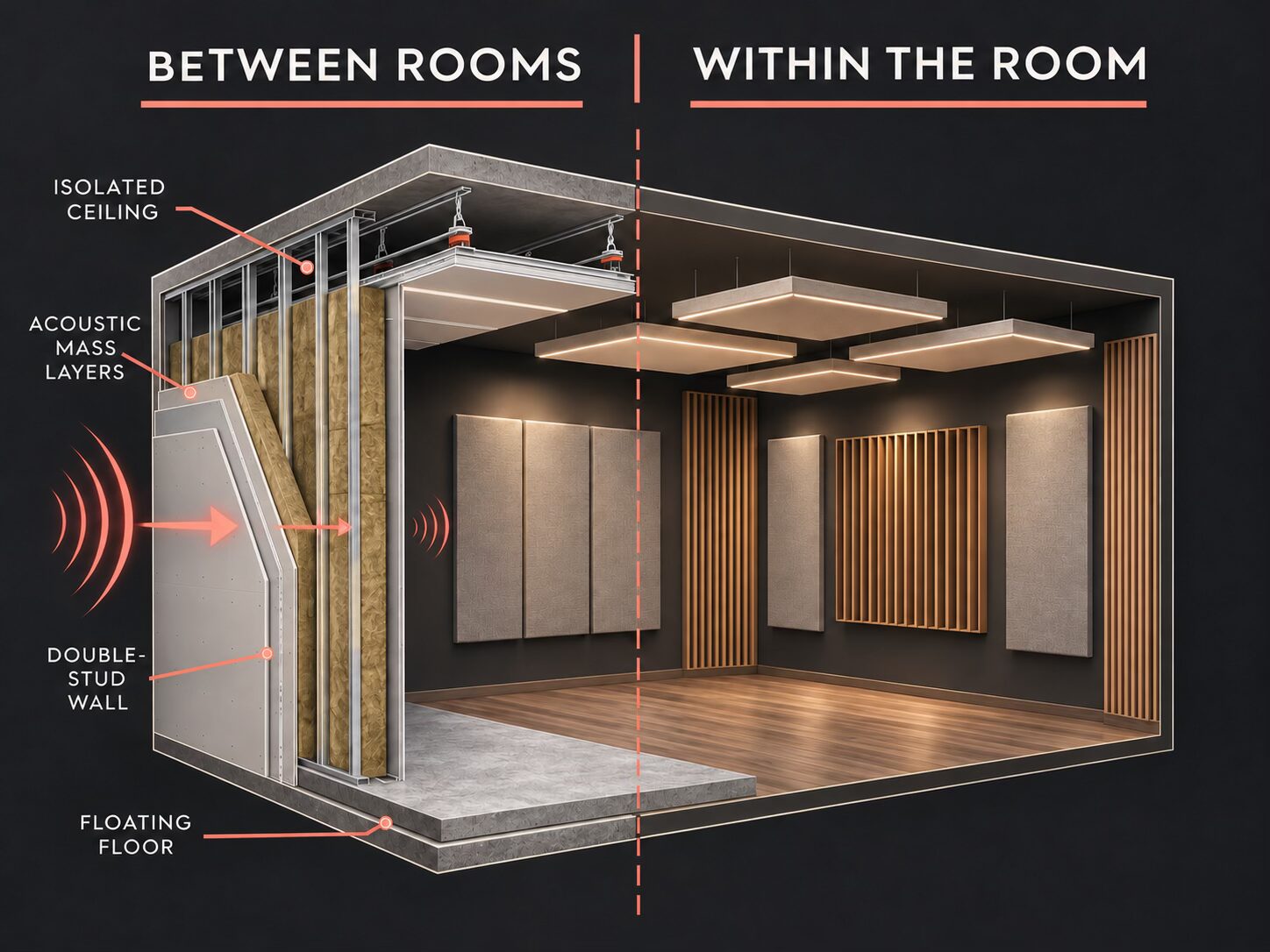
Is Sound Leaving the Room — or Bouncing Around Inside It?
Soundproofing & Sound Isolation
Soundproofing addresses sound travelling between spaces.
If conversations from a boardroom can be heard in the corridor or voices from an adjacent office are entering your room, the problem involves the separating construction and surrounding transmission paths. Typical treatments may involve walls, ceilings, cavities, doors, ducts and structural connections.
Acoustic Panel Treatment
Acoustic panel treatment controls sound within the room.
Glass, concrete and other hard finishes can create echo and excessive reverberation that affects speech clarity, presentations and video conferencing. Acoustic panels, baffles and related absorption products are designed to manage these internal reflections.
COMPLETED OFFICE PROJECT
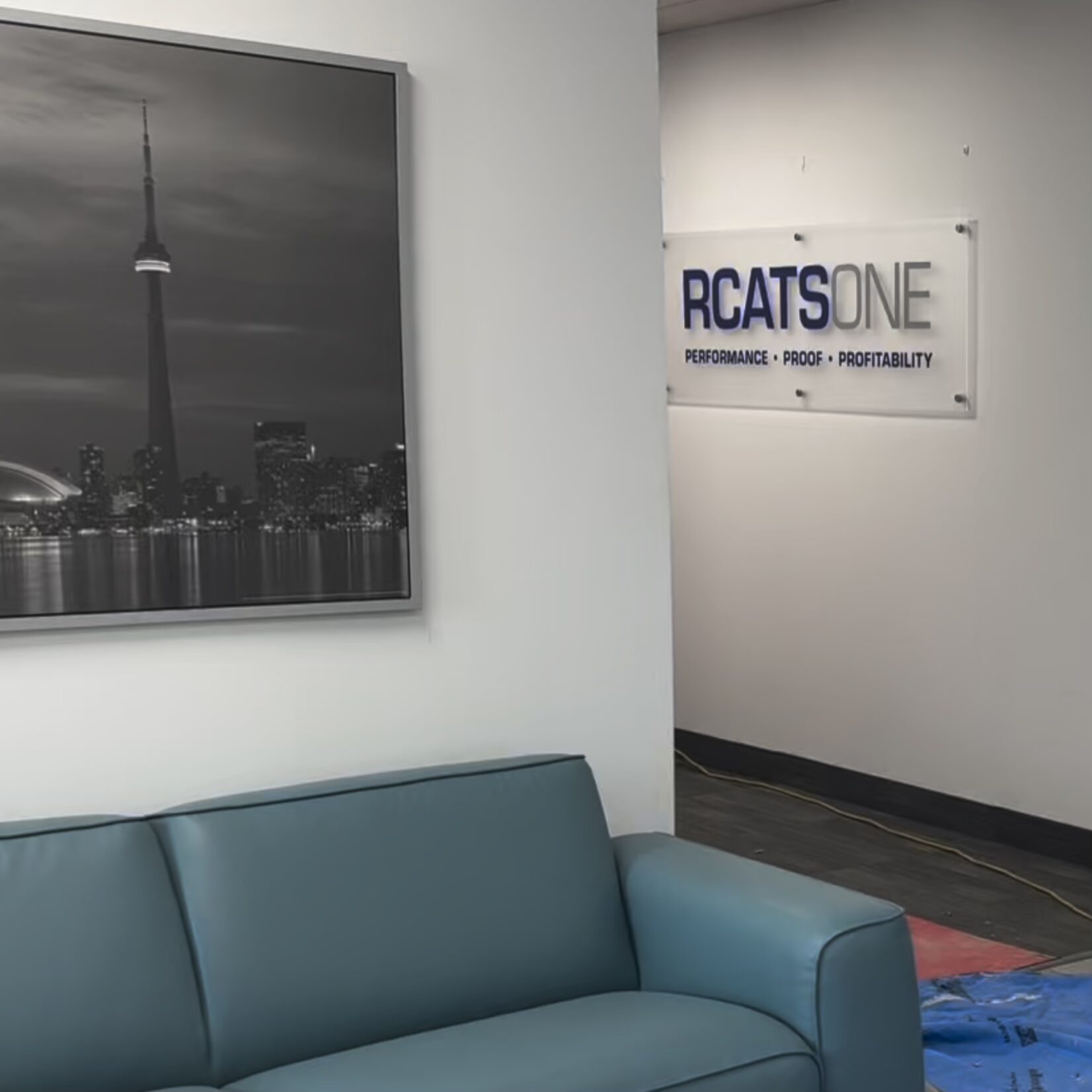
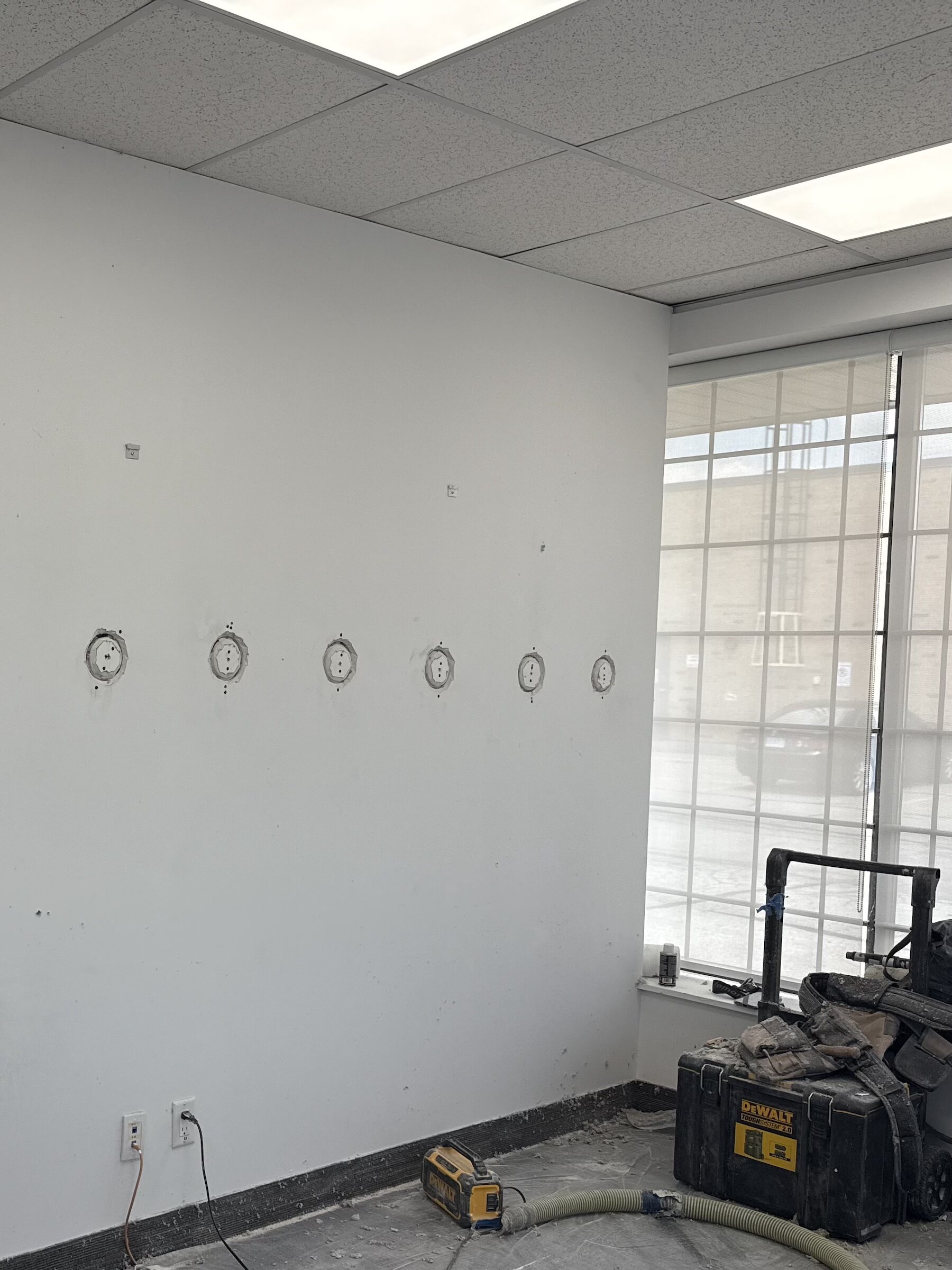
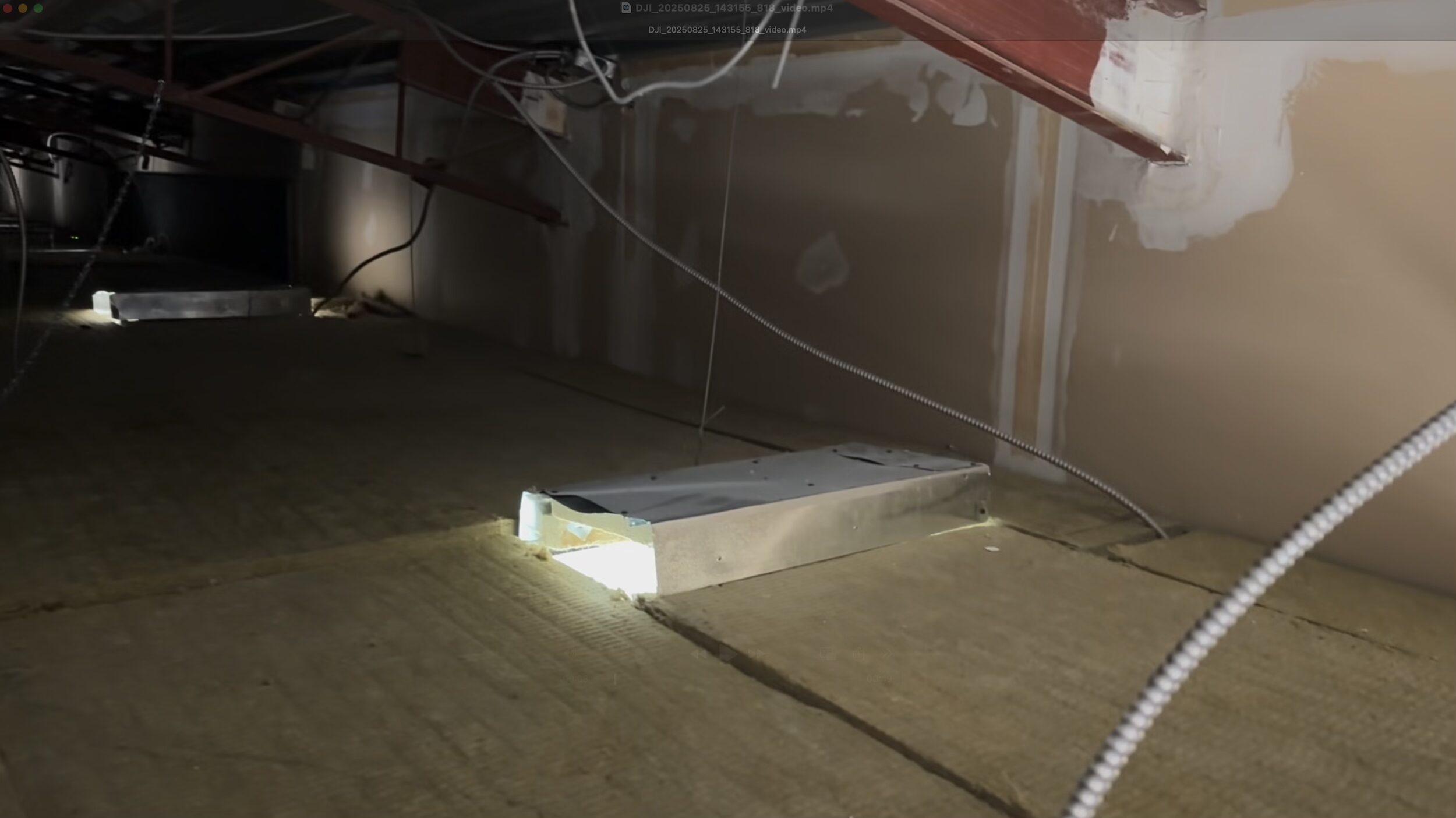
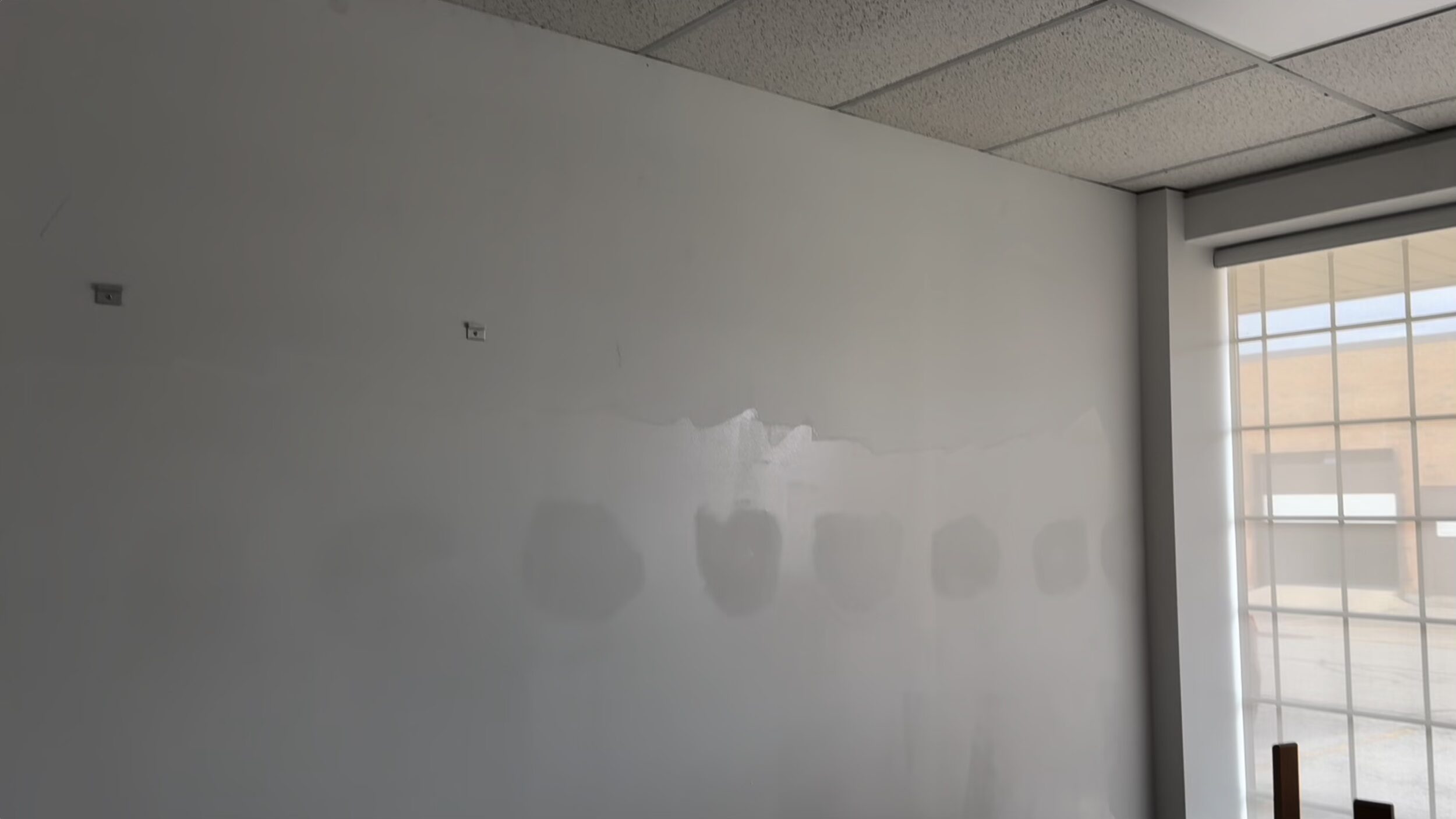
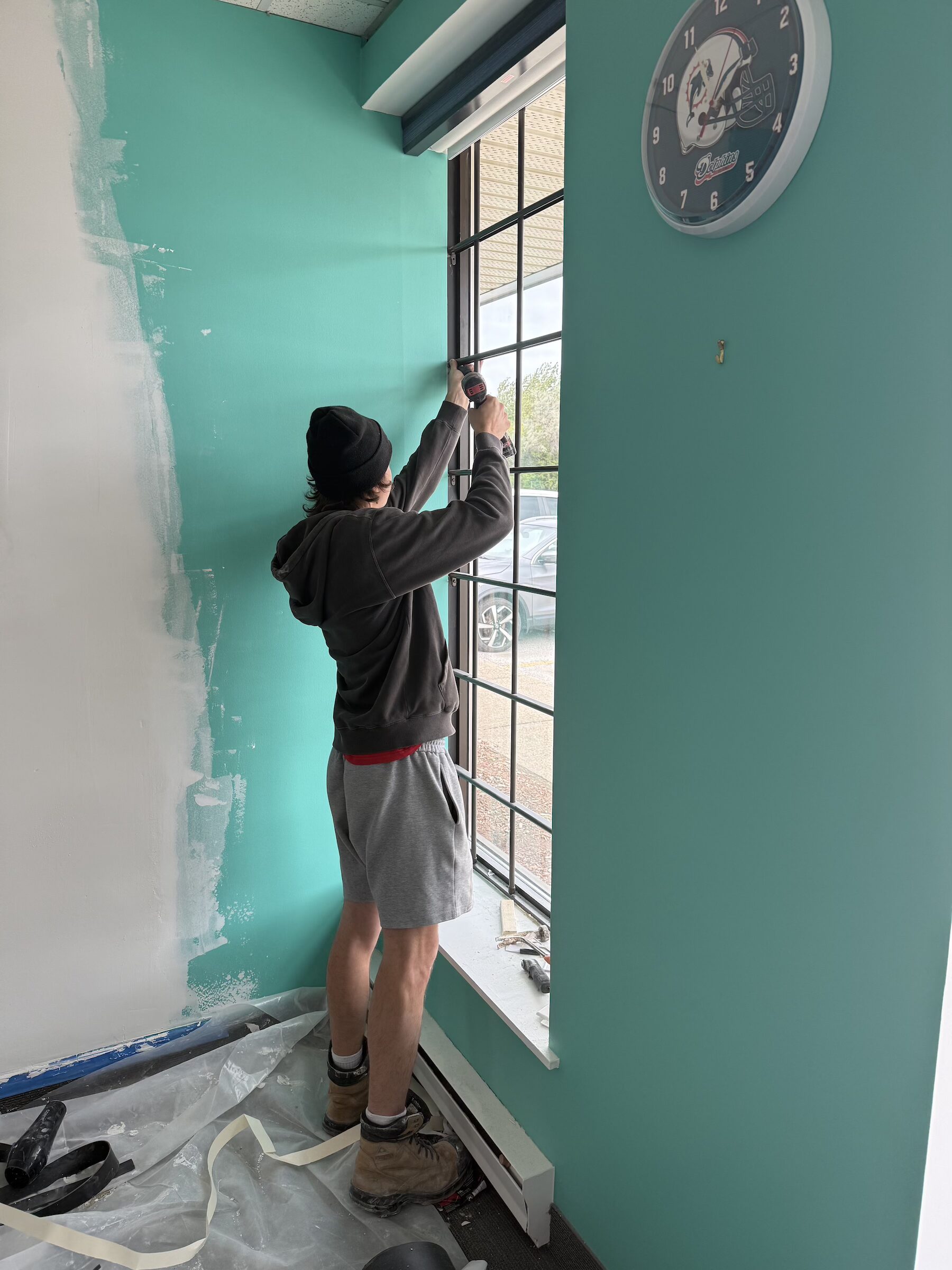
Before & After — RCATSONE Office Speech Privacy Retrofit
RCATSONE contacted Inaudible after conversations from several offices and the boardroom were travelling beyond the intended spaces. The wall cavities were only part of the problem. Sound was also moving through the suspended ceiling, shared air returns and small perimeter gaps.
Inaudible addressed the identified transmission paths through a coordinated four-day retrofit that included wall-cavity treatment, continuous above-ceiling treatment, crosstalk silencers, acoustic sealing and restoration of the treated office finishes.
COMMERCIAL CLIENT EXPERIENCE
Speech Privacy in Real Office Environments
“Pascal and his team did a great job, we had several offices and a boardroom sound-proofed. A full turnkey solution, completed with the walls repatched and painted and the space cleaned up. The soundproofing works well. It was a pleasure to deal with Pascal and his team, I highly recommend their work and service.“
Alfred Engelhardt
Chief Executive Officer at RCATSONE
“Pascal helped us with soundproofing for our commercial office and meeting rooms, including the boardroom and adjacent spaces. He was knowledgeable, easy to work with, and delivered great results. Even after the job was complete, we had a small follow-up need—and he came by and took care of it at no charge. That kind of service really sets him apart. Highly recommend.”
TARIQ JAMAL
VP TECHNOLOGY & FACILITIES / PMP, CISM

THE PROJECT STAGE CHANGES THE OPTIONS
Retrofit an Existing Office — or Build the Isolation in Earlier
Existing & Occupied Offices
Soundproofing can often be introduced into an existing office without completely rebuilding the space. Depending on the construction, retrofit strategies may include cavity treatment, ceiling-path treatment, crosstalk silencers, door sealing and targeted assembly upgrades.
Renovations & New Commercial Interiors
When walls and ceilings are still open, acoustic details can be coordinated before the assemblies are closed.
This provides more flexibility for isolation systems, cavity insulation, wall construction, penetrations and ceiling/plenum detailing.
FROM SOUND PATH TO SOUNDPROOFING PLAN
How We Approach Office Soundproofing
Step 1
Identify What Is Being Heard
We begin with the affected rooms, who can hear the sound and where the unwanted transmission appears to be occurring.
Step 2
Trace the Likely Sound Paths
Walls, suspended ceilings, HVAC systems, doors, mullions, penetrations and surrounding construction are considered as part of the same problem.
Step 3
Prioritize the Paths That Matter
Not every weakness contributes equally. The scope focuses on the conditions most likely to be carrying sound between the spaces.
Step 4
Install, Patch & Paint
The selected treatments are installed with consideration for the existing workplace. Where finishes are affected, treated areas are restored according to the agreed scope.
OFFICE SOUNDPROOFING FAQS
Questions About Office Speech Privacy & Soundproofing
How do you soundproof a private office?
The appropriate solution depends on how sound is travelling. Wall cavities, suspended ceilings, doors, HVAC paths and perimeter gaps can all contribute and should be considered together.
Why can conversations be heard through office walls?
The partition itself may be lightly built or contain an empty cavity, but sound can also bypass the wall through the ceiling, ductwork, doors and surrounding construction.
Can an existing office be soundproofed without removing all the drywall?
In some assemblies, wall cavities can be treated through controlled access ports without removing the complete drywall surface. Other transmission paths may require different treatments.
How do you improve speech privacy in a boardroom?
Boardroom speech privacy may require attention to the separating walls, ceiling/plenum conditions, doors, mechanical paths and penetrations depending on the construction.
Can sound travel through a T-bar ceiling?
Yes. When partitions do not provide sufficient separation through the ceiling space, sound can travel above the suspended ceiling and into adjoining rooms.
Can conversations travel through HVAC vents?
Yes. Shared return or supply-air paths can create an acoustic connection between rooms. Depending on the mechanical system, crosstalk silencers or related treatments may be appropriate.
Do acoustic panels soundproof an office?
Acoustic panels primarily reduce reflections and reverberation inside a room. They generally do not replace the construction required to reduce sound transmission between rooms.
RELATED COMMERCIAL SOLUTIONS
Explore Related Inaudible Services
Healthcare & Therapy Soundproofing
Speech-privacy solutions for medical offices, clinics, consultation rooms and therapy practices.
Acoustic Treatment
Control echo, reverberation and room acoustics in boardrooms, meeting rooms and other hard-surface spaces.
Pre-Construction Acoustic Isolation
Plan wall, ceiling, cavity and isolation details before commercial assemblies are closed.
GET GUIDANCE
Can Conversations Be Heard Outside the Room?
Sound may be travelling through the wall—or around it through ceilings, doors, air paths and connected construction.
A consultation can help identify the likely transmission paths and determine what level of intervention makes sense for your office.