The overrated sub performing industry standard (the bare minimum)
With the ongoing boom in legal basement suites in Calgary, homeowners and real estate investors are all chasing the exact same thing: a truly quiet home. Whether you are trying to block heavy footsteps from the main floor or give your rental tenants total privacy, standard drywall simply isn’t enough.
If you have started researching how to reduce noise between floors, you have probably been told by general contractors, architects or drywallers to install resilient channels, insulation and 2 drywalls 5/8 fire rated.
You read about it almost everywhere online and saw countless “social media gurus” talking about that.
Here is the truth, they are the subpar industry standard for decoupling. That is right!
Resilient channels fail to stop noise or at least not enough noise.
Wait what? How something that is spoken about everywhere can be subpar?
Well, first, it’s because they are the in the building code and the building code is the bare minimum established.
Second, often times Gcs are stuck in between what is the best and what is the most cost effective to stay on budget. Better usually means more money.
Resilient channels are also the most available (just about every hardware store carry them) and take the least amount of space.
Lastly, they are countless products on the market for construction so it does make sense that architects and Gc cant know them all.
If you want professional-grade decoupling, you need to upgrade to Sound Isolation Clips and Hat Channels (often referred to simply as “Hat Clips”). Here is why this system completely outclasses the old resilient channel standard.
The Problem with Resilient channels :
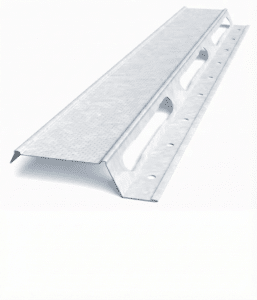
A resilient channel (RC-1) is a single, flexible strip of metal Z shaped attached to your joists / studs, which your drywall is then screwed into.
It reduces the direct point of contact with the structure and create an air gap. Therefore reduce vibration and airborne sound transmission. In theory, it sounds great but, in reality, it is not enough.
- The “Short-Circuit” Disaster: Resilient channels are incredibly thin. When the drywallers come in, if they use a screw that is even a fraction of an inch too long, it pierces right through the channel and into the wooden joist. This is called a “short circuit.” Every short-circuited screw diminish the soundproofing of the entire ceiling, giving the sound a direct bridge to travel down.
- Still too many point of contacts: The points of contact are reduced, but only from 120 to 64 per 100 sqft, and not isolated (hat clips are 20 isolated)
- Low Impact Noise Reduction: The sound reduction and impact reduction boost is not enough (about STC 4 and IIC 35) and many people complain about the feet stomping and vibrations after the work is completed in Calgary legal suites.
The Solution: Hat Clips (Sound Isolation Clips) + Furring Channel
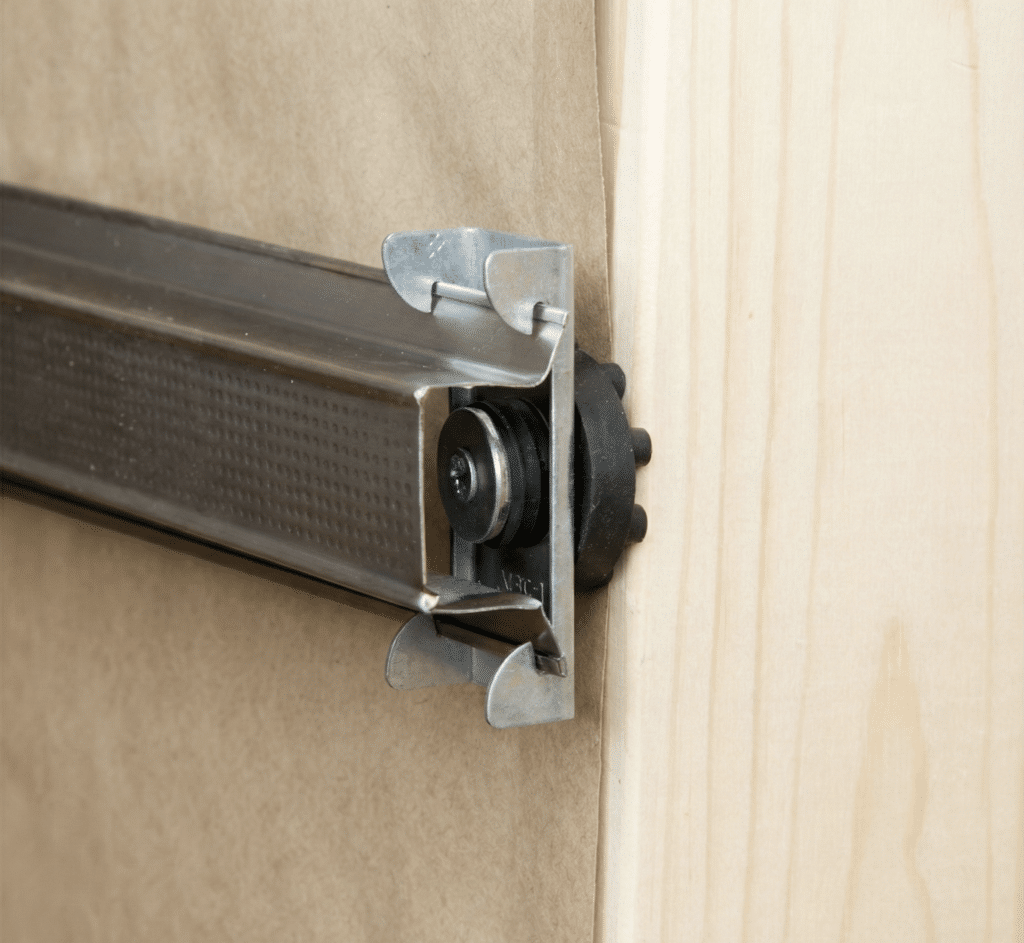
Instead of a single flimsy piece of metal, a “hat clip” system uses a two-part approach for maximum decoupling. First, rubber-backed acoustic clips (like RSIC-1) are screwed directly into the floor joists. Then, a rigid 7/8-inch steel drywall furring channel (the “Hat Channel”) is snapped into the clips. Finally, the drywall is screwed into the hat channel.
Resilient Channels vs. Hat Clips: The Matchup
| Feature | Standard Resilient Channel (RC-1) | Sound Isolation Clips + Hat Channel |
| Decoupling Method | Thin, flexible metal web | Heavy-duty rubber/silicone isolator |
| Risk of Short-Circuiting | Very High (Screws easily hit the joist) | Virtually Zero (Hat channel sits 1-5/8″ off the joist) |
| Weight Capacity | High | Sufficient (Easily supports multiple drywall layers) |
| Low-Frequency Blocking | Poor (Struggles with heavy footsteps/bass) | Excellent (The rubber absorbs heavy impact vibrations) |
| Acoustic Performance | Average (Requires perfect installation) | Exceptional |
Meeting the Alberta Building Code in Calgary
The bare minimum for a legal secondary suite in Calgary, the Alberta Building Code demands that shared ceilings hit a minimum Sound Transmission Class (STC) rating of 43. Once again this is the absolute minimum, and quite frankly based on our past experience it is not enough.
A quiet environment start around STC 55 an IIC 70.
A ceiling built with sound isolation clips, hat channels, mineral wool insulation, and 2 layers of 5/8″ drywall routinely pushes STC ratings into the mid-to-high 50s. This isn’t just about passing inspection; it’s about eliminating noise complaints from tenants and keeping your sanity intact on the main floor.
Where to Buy Sound Isolation Clips and Hat Channels in Calgary
Finding these premium soundproofing materials locally requires knowing where to look, as big box stores usually only carry the older, inferior RC-1 channels. If you are looking for where to buy hat channel and sound clips in Calgary, check out:
- SounDivide: Located at 1909 34 Ave SW, Calgary, Alberta, T2T 2C2
The Bottom Line
Don’t gamble your basement renovation on outdated technology.
Hire a professional.
Countless people call us every week complaining that they paid their contractor for “Soundproofing” but it didn’t work (or at least not how they wanted to) and now we must start over. Upgrading from resilient channels to a hat clip system (and specialty acoustic materials) will cost more but paying more once still cost less than paying twice.
Learn more about our Calgary soundproofing services