
Quiet Is Possible Without Tearing Down Walls in Toronto

Written By Pascal Fontaine-Ferrand

Blog

Enhance privacy and tranquility with effective soundproofing techniques for walls without demolition. Discover simple methods for a quieter home today!

If you can hear every footstep, phone call, or TV next door in a Toronto home — whether in The Annex, High Park, Roncesvalles, The Danforth, Riverdale & Leslieville, or North York communities like Willowdale, Bayview Village, and Newtonbrook — it’s easy to assume that fixing it means tearing the home apart. But what if peace and privacy were possible without drywall dust, mess, or construction chaos?

Inaudible Inc. specializes in turning noisy Toronto homes into quiet sanctuaries using a professional, non-invasive process called dense-pack cellulose soundproofing. No gut jobs. No wasted materials. Just proven acoustic science that works behind the walls Toronto homeowners already have — from century-old semis in The Annex to high-rises in Willowdale.

Soundproofing myths spread faster than noise itself, and Toronto homeowners in older, densely built neighbourhoods hear them constantly. Foam panels, egg cartons, and fabric “sound absorbers” may reduce echoes, but they do nothing to stop sound transmission — and they’re the first thing most homeowners buy.

The reason?

Echo control ≠ soundproofing. Those thin foams absorb reflections inside a room, softening how a space sounds to the people already in it. But sound traveling between rooms doesn’t behave like an echo — it’s vibration moving through a solid structure, and foam mounted on a wall surface does almost nothing to interrupt that path. Mass matters. To block sound, a wall must resist vibration, and resisting vibration takes weight and density, not surface texture. A standard interior wall — two layers of drywall with an air gap in between — is mostly empty space, which is exactly why voices, bass, and footsteps pass through it so easily in the tightly spaced homes common to areas like Roncesvalles and Riverdale & Leslieville. Lightweight materials can’t change that equation, no matter how they’re marketed. That’s where homeowners get frustrated — they invest in trendy “solutions,” spend a weekend installing them, and still hear every word from the next room or the unit next door. Real results come only from adding dense, continuous material inside wall cavities, creating the mass and airtightness needed to physically stop vibration before it ever reaches the other side.

What Actually Works Behind Your Existing Walls

Dense-pack cellulose insulation is a professional technique originally developed for high-performance energy retrofits — engineers found that packing recycled cellulose fiber tightly into a wall cavity dramatically cut air leakage and heat loss. It didn’t take long for acoustic contractors to notice the same density that stops air movement also stops sound waves, and the technique has since become one of the most effective non-invasive soundproofing methods available for Toronto’s mix of older character homes and newer condo towers.

How the process works

The installation is deliberately minimal-impact, which matters in neighbourhoods like The Danforth and High Park where homeowners have invested heavily in original trim, plaster, and finishes:

  • Small access points — typically an inch or two wide — are drilled between wall studs, spaced to reach every cavity in the wall.
  • Specialized pneumatic equipment compresses cellulose fibers and blows them into the cavity under pressure, packing the material densely enough that it won't settle or shift over time.
  • A technician monitors fill density as they work, ensuring there are no gaps or voids that could let sound leak through.
  • Once a cavity is completely filled, the access hole is sealed, patched, and finished smooth — no drywall removal, framing changes, or repainting an entire room required.

The result is a wall that looks exactly the way it did before the crew arrived, but performs dramatically differently when sound hits it.

The Science Behind the Silence

Inaudible’s Dense Fill solution uses dense cellulose that adds mass + airtightness, increasing the wall’s Sound Transmission Class (STC) rating by 10–20 points, turning normal conversation from the next room — or the next unit in a Bayview Village condo — into a faint, muffled tone. And because cellulose is made from recycled fibers, it’s an eco-friendly alternative to foam or other fiber insulation like mineral wool or fiberglass.

When to Consider a No-Drywall Soundproofing Retrofit in Toronto

This approach is perfect for spaces where demolition isn’t an option, which describes much of Toronto’s housing stock:

  • Condos in areas like North York, Willowdale, and Bayview Village, where you can't disturb party walls without violating building or strata restrictions — dense-pack works entirely from small interior access points, so shared structures stay untouched.
  • Finished basements with existing paint, trim, or paneling that a homeowner in High Park or Roncesvalles has already invested in and doesn't want to redo.
  • Home offices and nurseries that need peace without downtime — since there's no demolition, the room can often be back in use the same day.
  • Rental properties and multi-unit buildings, common throughout Riverdale & Leslieville and The Danforth, where major construction isn't practical or permitted by a landlord or condo board.

You’ll notice the difference most with airborne noise — voices, TV, street sounds — but the added mass also helps control some vibration and impact transfer, such as footsteps or a dropped object in the unit or room above, a frequent complaint in Toronto’s semi-detached and row houses.

If you’re hearing these noises daily in your Toronto home, your walls likely lack proper acoustic density. A professional retrofit is the cleanest way to restore quiet without disrupting your living space, and because the work is contained to small access points, most homeowners don’t need to move furniture out of the room or plan around days of construction.

What to Expect From a Professional Installation

An Inaudible technician begins with a site assessment to locate stud spacing and electrical paths, checking for any wiring, plumbing, or fire-blocking that needs to be worked around before drilling begins — an important step in Toronto’s older homes, where knob-and-tube wiring and non-standard framing are common in neighbourhoods like The Annex. The process then follows these steps:

  • Protect floors and furniture with clean sheeting, so there's no cleanup of dust or debris tracked through the rest of the home.
  • Drill discreet access holes between studs, positioned so patched spots are barely noticeable once painted.
  • Densely pack cellulose into every cavity, checking fill density throughout to make sure there are no gaps that would let sound leak through.
  • Seal, patch, and prepare the access points for paint touch-up, matching the existing wall texture as closely as possible.

Most rooms are completed in a single day. There’s minimal dust, no debris to haul away, and your furniture stays where it is. It’s fast, clean, and quietly transformative — and because the crew works from small access points rather than opening up the wall, there’s no need to relocate to another part of the house while the work is underway, whether that house is a Victorian semi in Roncesvalles or a high-rise unit in Newtonbrook.

The Real-World Results You Can Expect

Typical improvements range from STC 35–40 walls upgraded to STC 55–60 after treatment — a jump that represents a significant reduction in perceived loudness. In everyday language:

  • Clear speech becomes a soft hum, audible only if you're listening for it.
  • Music is audible but no longer disruptive, even bass-heavy tracks played at a normal volume next door.
  • TV or gaming noise is significantly reduced, to the point where late-night sessions no longer wake anyone else in the home.
  • Footstep and impact noise from adjoining rooms softens noticeably, though it isn't eliminated the way airborne noise is.

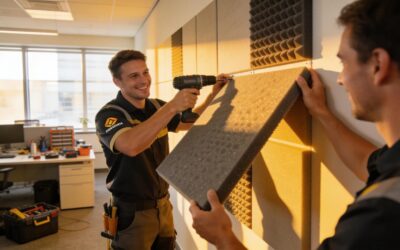
Across Toronto’s older, densely built neighbourhoods, clients consistently report that they can finally sleep, focus, or relax — without the constant reminder of life next door. For many homeowners, that shift shows up in small but meaningful ways: a nursery in a Leslieville row house where a nap actually lasts through a phone call in the next room, a home office in a Willowdale condo where a video call doesn’t pick up a neighbor’s TV, or a Newtonbrook bedroom that finally feels like a retreat instead of an extension of the unit next door.

💬 Experience Peace Without the Mess

Quiet isn’t a luxury. It’s comfort, focus, and well-being. Inaudible Inc. makes it simple to get there — eco-friendly materials, expert technicians, and proven acoustic results without renovation.

No obligation — just honest advice from Toronto’s acoustic contracting specialists.

📍 Serving the Greater Toronto & Hamilton Area Proudly helping homeowners across Toronto, Mississauga, Oakville, and the GTHA build quieter, more comfortable living spaces — one wall at a time. Inaudible Inc. regularly works in The Annex, High Park, Roncesvalles, The Danforth, Riverdale & Leslieville, and North York (including Willowdale, Bayview Village, and Newtonbrook), helping homeowners in these older, densely built neighbourhoods eliminate party-wall and floor noise without renovation. Whether you need soundproofing The Annex homeowners trust, soundproofing High Park character homes, soundproofing Roncesvalles semis, soundproofing The Danforth row houses, soundproofing Riverdale Leslieville rentals, soundproofing North York towers, or soundproofing Willowdale condos, the same dense-pack cellulose process delivers quiet without renovation.

Frequently Asked Questions

Will dense-pack cellulose soundproofing damage my walls or require major renovation?

No. The process only requires small access holes drilled between wall studs to inject the cellulose — there’s no drywall removal, no demolition, and minimal dust. Holes are sealed and finished smooth afterward, so your walls, paint, and furniture stay largely undisturbed, whether the home is a heritage property in The Annex or a modern build in North York.

How much quieter will my home actually be after treatment?

Most walls see their Sound Transmission Class (STC) rating rise by 10–20 points, with typical upgrades going from STC 35–40 to STC 55–60. In practical terms, clear speech becomes a soft hum, music is audible but no longer disruptive, and TV or footstep noise drops significantly.

Is this soundproofing method safe for condos and shared walls?

Yes — dense-pack cellulose is ideal for condos in areas like Willowdale, Bayview Village, and North York, and other spaces where you can’t disturb party walls. Because it works from small access points rather than tearing into shared structures, it’s one of the few options that improves privacy without violating building or strata restrictions.

How long does a soundproofing retrofit take?

Most rooms are completed in a single day. An Inaudible technician assesses stud spacing and electrical paths first, then protects your space, drills discreet access holes, packs the cavities, and seals everything — with little debris to clean up afterward.

Do you serve homes outside downtown Toronto?

Yes. Inaudible Inc. serves homeowners across the Greater Toronto & Hamilton Area, including The Annex, High Park, Roncesvalles, The Danforth, Riverdale & Leslieville, and North York neighbourhoods like Willowdale, Bayview Village, and Newtonbrook — many of which have older, densely built homes where party-wall and floor noise are common.

More Posts