
SPEECH PRIVACY FOR HEALTHCARE
Medical Office, Clinic & Therapy Soundproofing
Help reduce conversations travelling between treatment rooms, offices, consultation spaces and waiting areas with soundproofing solutions designed around the actual transmission paths in your building.
Inaudible works with medical offices, clinics, therapists and other privacy-sensitive practices across Toronto and the GTA to address sound travelling through walls, ceilings, doors, HVAC paths and structural gaps.
PRIVACY-SENSITIVE SPACES
Soundproofing for Healthcare & Private Practices
Different healthcare spaces create different privacy and noise-control challenges. The solution starts with understanding how the rooms are built, how they connect and where sound is actually travelling.
Medical Offices & Clinics
Help reduce speech transfer between exam rooms, consultation spaces, staff areas and adjoining rooms.
Therapy & Counselling Practices
Improve speech privacy where sensitive conversations take place beside neighbouring offices, corridors or shared waiting areas.
Exam & Consultation Rooms
Address sound travelling through partition walls, suspended ceilings, doors, penetrations and shared building systems.
Healthcare Administrative Offices
Support more private conversations in management offices, HR spaces, boardrooms and staff meeting areas.

WHERE SOUND TRAVELS
When Conversations Leave the Room
A wall can appear solid and still be only one part of the transmission path. In many clinics and professional offices, sound travels through wall cavities, above partitions through suspended ceiling spaces, through shared return-air systems and around doors, electrical penetrations or perimeter gaps.
That is why adding one product to one wall does not always solve a speech-privacy problem. The first task is identifying the paths that matter in the actual building.
Private conversations deserve private rooms.
Speech Can Travel Through More Than the Wall
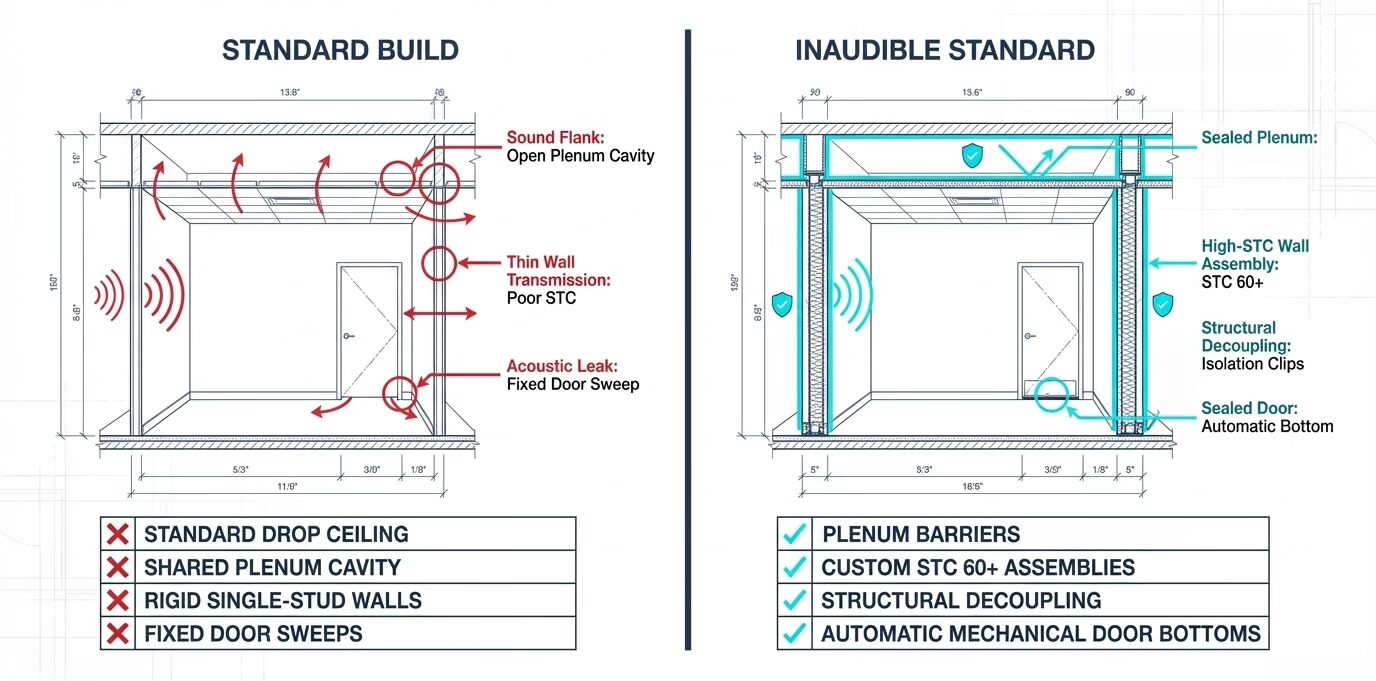
Wall Cavities
Uninsulated or lightly built partitions can allow voices to transmit directly between adjoining rooms.
Ceiling & Plenum Paths
When partitions stop at a suspended ceiling, sound may travel above the wall and into neighbouring spaces.
HVAC Crosstalk
Shared supply or return-air paths can create a direct route for conversations between rooms.
Doors, Penetrations & Gaps
Door perimeters, electrical boxes, pipe penetrations and small construction gaps can weaken an otherwise substantial assembly.
SITE-SPECIFIC SOUND CONTROL
A Layered Approach to Speech Privacy
There is rarely one universal healthcare soundproofing assembly.
Inaudible selects the approach according to the existing construction, the source of the sound, the rooms involved and the transmission paths identified on site.
Most projects begin by addressing the primary leakage paths—wall cavities, ceiling and plenum conditions, shared air returns, doors and perimeter gaps.
When a Higher Level of Isolation Is Required
Some spaces require more than targeted retrofit work.
Where the existing construction or privacy objective calls for a more substantial intervention, the solution may incorporate isolation clips and channels, added mass, damping materials, specialty gypsum and other isolation components as part of a more advanced wall or ceiling assembly.
Dense-Fill Wall Cavity Treatment
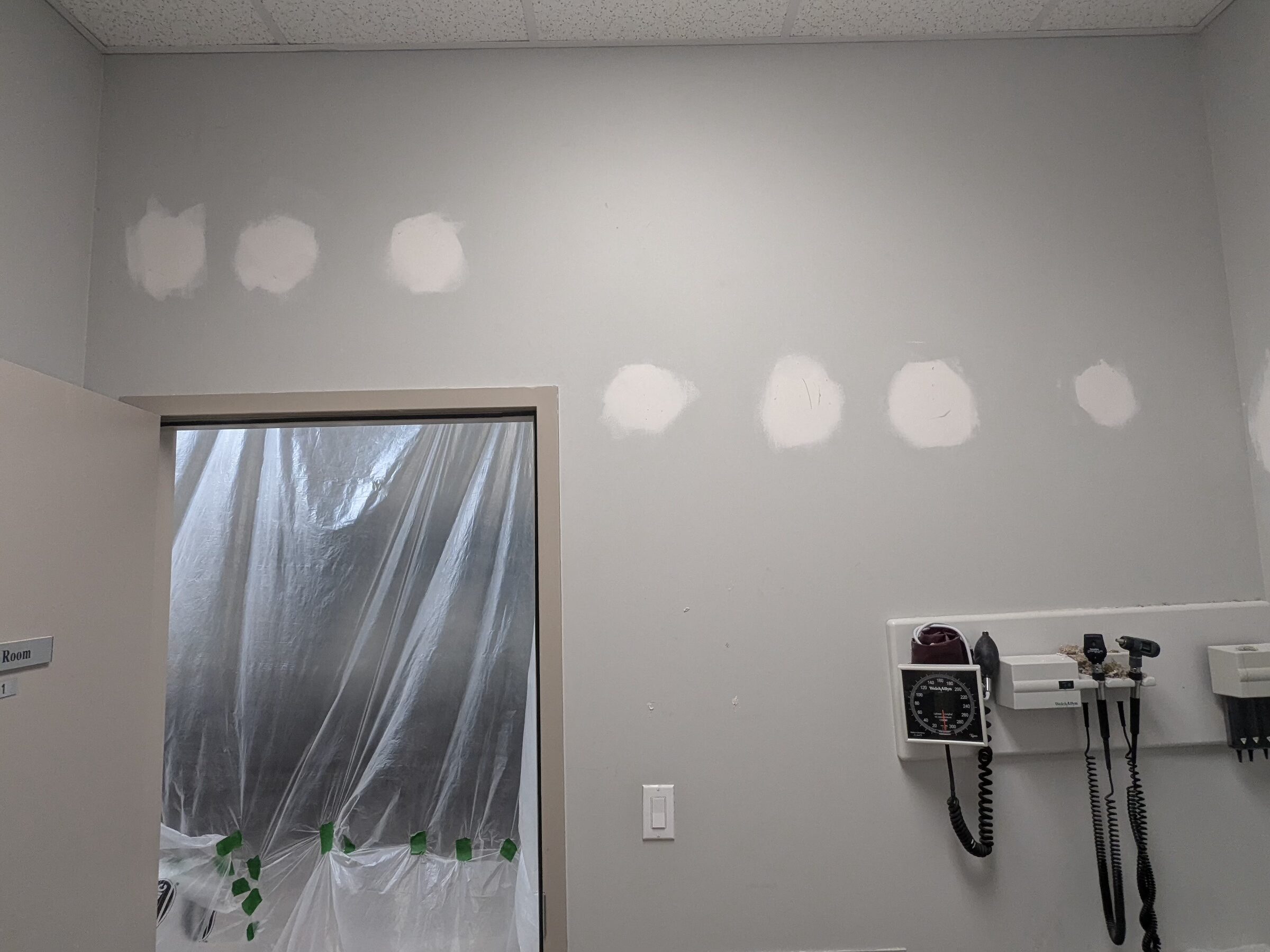
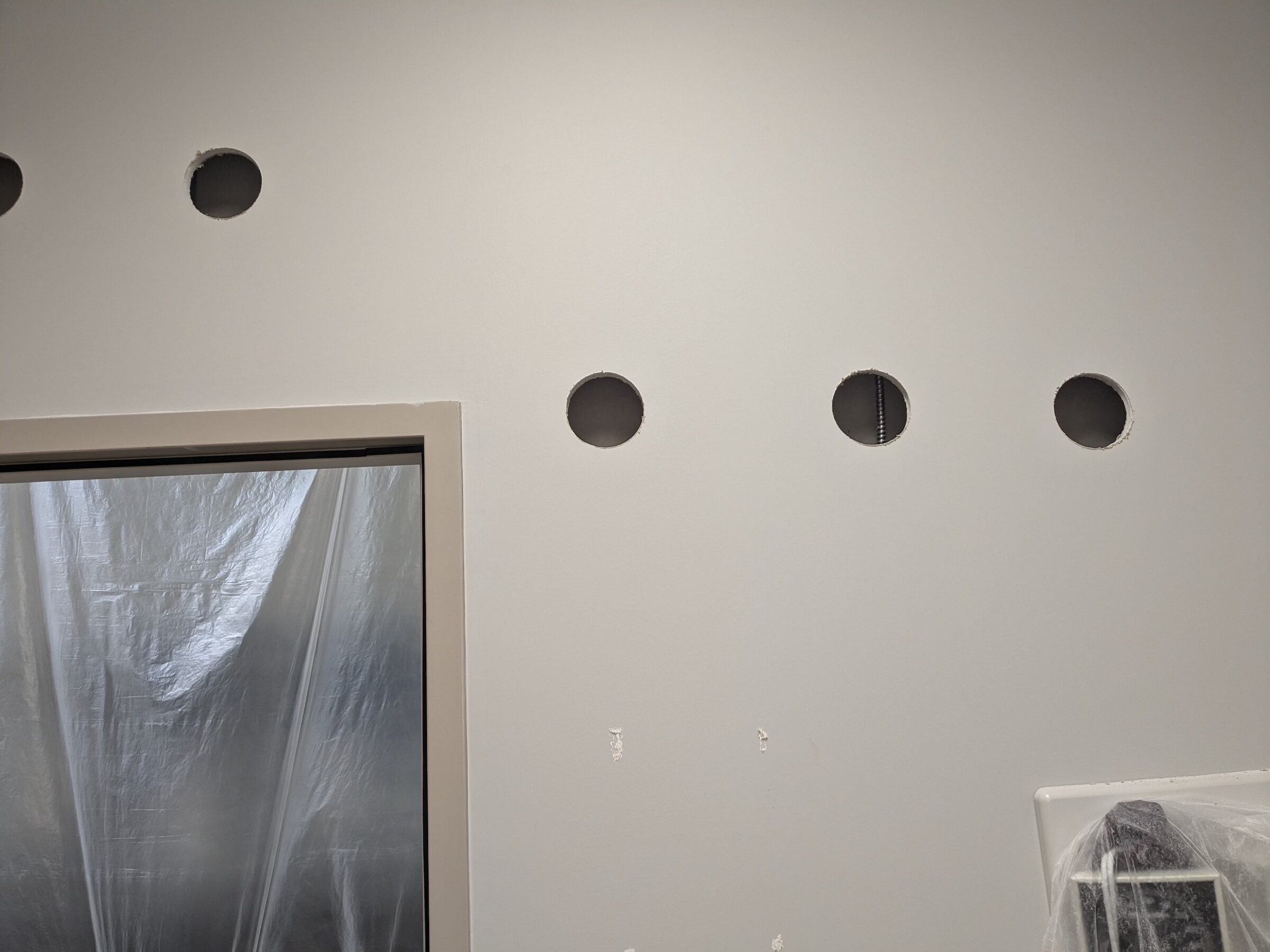
Existing wall cavities can often be treated with dense-pack cellulose through controlled access ports without removing the existing drywall. This can be useful when the wall cavity itself is contributing to airborne speech transmission and a major teardown is not desirable.
Ceiling & Plenum Treatment
Where sound is travelling above partitions, additional treatment may be required at the ceiling or within the plenum to reduce the “up-and-over” path.
HVAC Crosstalk Control
Crosstalk silencers and related duct treatments can help reduce direct speech transmission through shared air paths while maintaining required airflow.
Doors & Perimeter Sealing
Acoustic door seals, sweeps and targeted sealing can address gaps around doors and other weak points in the room enclosure.
THERAPY OFFICE SOUNDPROOFING
Speech Privacy for Therapy & Counselling Practices
Therapy spaces create a particular challenge because conversations may be quiet but highly sensitive. A client should not need to wonder whether someone in the corridor, waiting area or neighbouring office can understand what is being discussed inside the room.
Common weak points include shared walls, hollow doors, ceiling plenums, return-air paths and penetrations around electrical or mechanical services.
For existing practices, many of these paths can be investigated and treated without completely rebuilding the office. The appropriate solution depends on the construction and the degree to which each path is contributing to the problem.
MEDICAL OFFICE & CLINIC SOUNDPROOFING
Sound Control for Exam Rooms, Clinics & Consultation Spaces
Medical offices often combine treatment rooms, waiting areas, staff spaces and administrative offices within the same commercial footprint. Sound can move between these areas through more than the partition itself.
Exam-room conversations may travel above T-bar ceilings. Shared air returns can connect neighbouring rooms acoustically. Doors and penetrations can create additional leakage paths.
Inaudible evaluates these conditions as part of the complete space rather than treating each room as an isolated wall problem. Solutions can be applied to existing clinics, renovations and new construction depending on the building and project stage.
REAL-WORLD SPEECH PRIVACY
See How These Problems Appear in Real Buildings
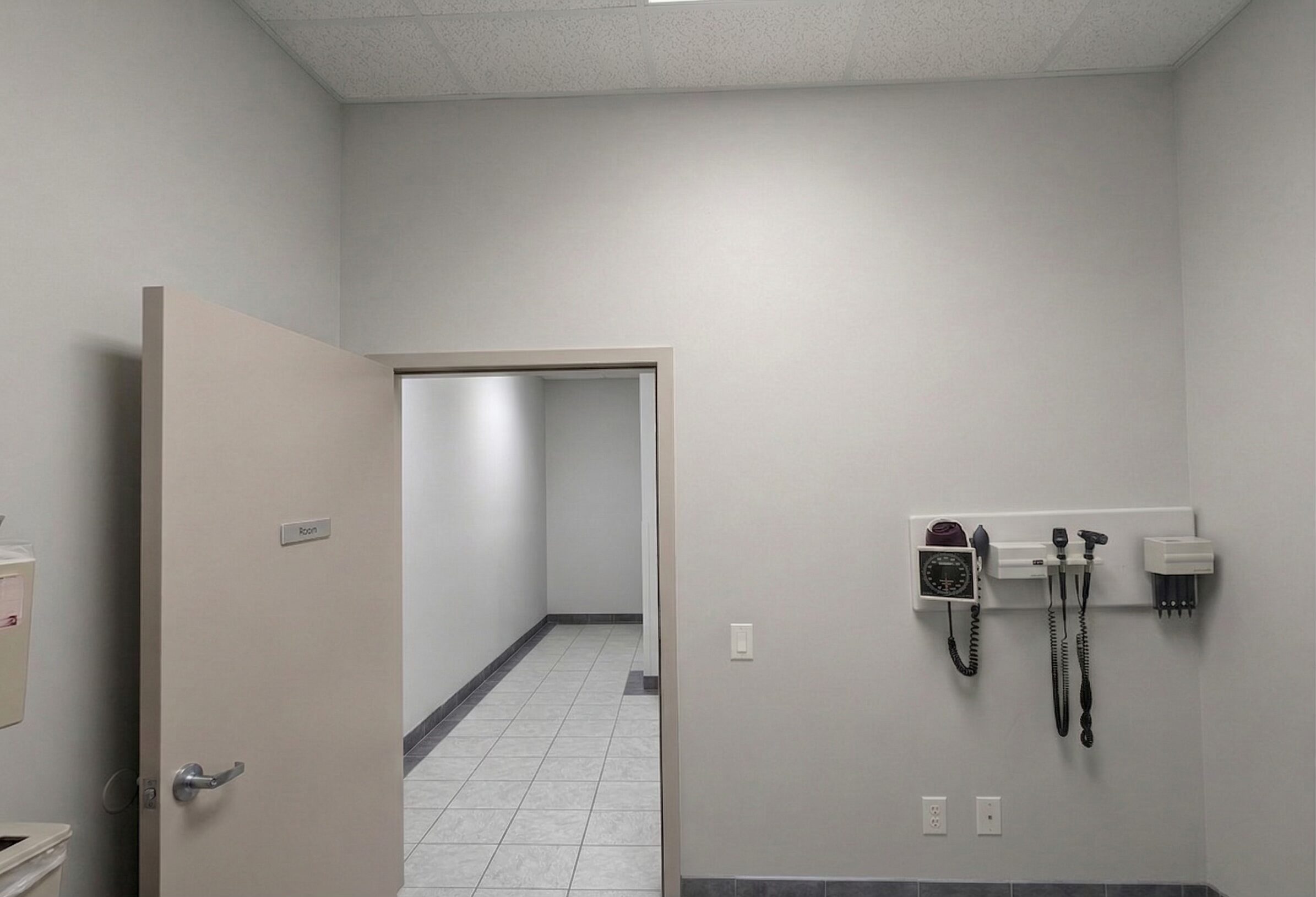
A Toronto medical clinic contacted Inaudible after patients and staff noticed conversations carrying between exam rooms and adjoining areas.
The visible partition walls were only part of the problem. Hollow wall cavities allowed speech to pass through the partitions, while the suspended ceiling created an additional path above the rooms.
Instead of rebuilding the clinic from the studs, Inaudible treated the existing wall cavities and addressed the above-ceiling flanking path as part of a coordinated retrofit.
The project demonstrates why healthcare soundproofing begins with understanding how sound is travelling through the actual building, rather than selecting one product in isolation.
HOW WE APPROACH THE PROBLEM
From Sound Path to Soundproofing Plan
Effective speech privacy starts by understanding where sound is escaping. The treatment is then built around the paths that matter in your particular space.
Step 1
Identify Where Speech Is Travelling
We review the affected rooms and investigate the likely transmission paths through walls, ceilings, doors, HVAC systems and surrounding construction.
Step 2
Determine Which Paths Matter Most
Not every weakness contributes equally. We identify the conditions most likely to be carrying speech between spaces so the scope can focus on the areas that matter.
Step 3
Build the Layered Treatment
Depending on the building, the solution may combine wall-cavity treatment, ceiling or plenum work, HVAC crosstalk control, perimeter sealing or more advanced isolation assemblies.
Step 4
Patch, Paint & Restore
The selected treatments are installed with consideration for the existing space. Where access points or finishes are affected, treated areas are restored as part of the completed scope.
HEALTHCARE SOUNDPROOFING FAQS
Questions About Speech Privacy & Medical Office Soundproofing
Can soundproofing improve speech privacy between medical offices?
Yes. Acoustic improvements can reduce how clearly speech transfers between rooms, but the appropriate treatment depends on the complete construction and the paths through which sound is travelling.
Can an existing medical office be soundproofed without removing all the drywall?
In some wall assemblies, Dense-Fill treatment can be installed through controlled access ports without removing the existing drywall. Other transmission paths may still require additional treatment.
Why can I hear conversations above a T-bar ceiling?
Many commercial partitions terminate at or near the suspended ceiling rather than continuing as a complete acoustic barrier to the structure above. This can allow sound to travel through the shared ceiling space and into neighbouring rooms.
Can conversations travel through air returns?
Yes. Shared duct and return-air paths can allow sound to move between spaces. Depending on the system, crosstalk silencers or other treatments may be appropriate.
Is therapy-office soundproofing different from medical-office soundproofing?
The underlying acoustic principles are similar, but the rooms, privacy priorities, building construction and operating conditions can differ. The solution should be based on the specific practice and transmission paths rather than the business label alone.
Does soundproofing make a medical office PHIPA-compliant?
Soundproofing can support speech-privacy objectives, but acoustic construction alone does not determine or guarantee legal compliance.
Privacy compliance can involve policies, procedures, technology, physical safeguards and other requirements beyond the acoustic performance of the room.
RELATED COMMERCIAL SOLUTIONS
Explore Related Inaudible Services
Office & Meeting Room Soundproofing
Speech-privacy solutions for offices, boardrooms, HR spaces and private meeting rooms.
Acoustic Panel Treatment
Control reverberation, echo and sound quality within a room when the problem is internal acoustics rather than transmission between spaces.
ACOUSTIC CONSULTATION
When the transmission path is unclear, begin with an assessment of the room and surrounding construction.
GET GUIDANCE
Not Sure Where the Conversation Is Escaping?
Speech can travel through walls, ceilings, doors, ductwork and small construction gaps.
A consultation can help determine which paths are contributing to the problem and what level of intervention makes sense for your space.
TRUSTED BY LEADING ACOUSTIC ENGINEERING & MATERIAL PARTNERS


